

Cambridge 100 Years Ago - February 1908
Anniversary Day was observed on 29 January with numerous picnics in the Domain while watching the bowls tournament and tennis matches - Cambridge vs Te Awamutu. Combined Bible Classes from all over Waikato met at Mr C Day's farm at Tamahere and R T Tudehope treated his employees to a picnic at 'The Norwegians' farm at Roto-o-rangi.
Prayers for rain were offered up at St Andrews' Church on Sunday evening.
Water tanks in the town were getting dry and many residents were making applications to have their properties connected with the Borough water supply. The milk supply was down at the factories.
A large number of people gathered around the new band rotunda in the Domain as the Cambridge Band rendered an acceptable programme.
Mr W Semmens of Hautapu killed a ring tailed opossum and gave it to Mr Ruge to have stuffed. Apparently some years ago Mr Thornton liberated a number on his Maungakawa property but it seemed no one had ever seen any in the Cambridge district before.
The Band Rotunda in the Domain was officially opened. The steelwork arrived from Glasgow last September and the work was supervised by the architect Mr C Reid.
The Cambridge Domain Board granted permission to a number of people who wanted to swim in the Lake - but only if the bathers robed themselves in proper costumes.
The official opening of the Seventh Day Adventist Training School was held in the chapel room - the chair occupied by Pastor O A Olsen. Mayor Buckland congratulated them on their choice of location saying that the Waikato would become the 'Garden of New Zealand' and Cambridge the health resort of the colonies.
Special services were held at St Paul's Methodist church after extensive renovations had been carried out. All the borer infested timber was replaced, the shingled roof replaced with iron and gas was laid on.
For the past two months the congregation worshipped in their gymnasium.
'Two Miles Out' in a letter to the Editor suggested that the Premier Sir J G Ward, coming to Cambridge to open the new Post Office, should take a look at the Post Office Bicycle. 'It is an old worn out piece of machinery that should have found the rubbish heap years ago. It is patched and tied up with string, sometimes minus a proper saddle.'
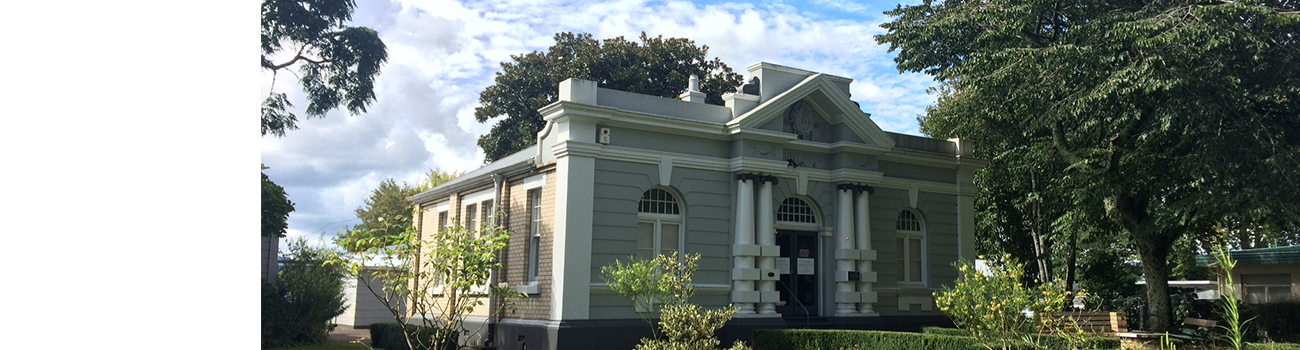
The opening of the new Post Office by the Premier Sir J G Ward was witnessed by about 700 people. From 1864 the postal and telegraph business was carried on in a small office, opposite the Redoubt, in Victoria Street. In 1877 a new office was built and served for 30 years. With the prosperity of the agricultural and pastoral sector, the Premier didn't think the new building would last that long (applause).
The Borough Council took the opportunity to ask for favourable consideration on a direct telephone wire from Cambridge to Auckland; a new railway station and the removal of the goods shed; the recognition of Cambridge as a tourist resort; and opening up of Native lands in the district.
In the afternoon the Cambridge ladies entertained Lady Ward at the Lawn Tennis Club and showed her around the Domain.
The lack of rain, dust and low milk returns gave residents the opportunity to thoroughly clean their water tanks. Health Inspector Bennett suggested 'A coating of lime afterwards would help keep the water pure and fresh, and thus go a long way towards minimising the risk of an outbreak of disease.'
A bushfire on the slopes of the Maungakawa range caused some concern to Te Waikato Sanatorium. The local fire brigade responded at 10 pm and worked until 5 am with beaters to keep the fire back.
The Maori Meeting House at Maungakawa was burnt by fire when the wind turned a controlled burn off. Valuable carvings, the throne and crown of the late King Tawhiao were destroyed. The settlement was known as Rawehitiki and the meeting house was capable of seating 500 people. It was deserted about 16 years previous.
The order for the chiming clock for the Post Office tower had been placed with Littlejohn and Son of Wellington and would take about six months to complete.
The Cambridge Road Board wrote to the Commissioner of Lands asking if they could take gravel from Crown Land tenants. The ever increasing traffic on the district roads compelled the Board to have a good supply of gravel on hand. In some cases it was cheaper to buy the land than pay 3 pence or 4 pence per yard in royalties to the land owner. On the other hand some land owners gave the gravel for nothing to secure good roads.
Back to Index