The stories not always seen
-
By Elizabeth Harvey, with thanks to Raewyn Nordstrom
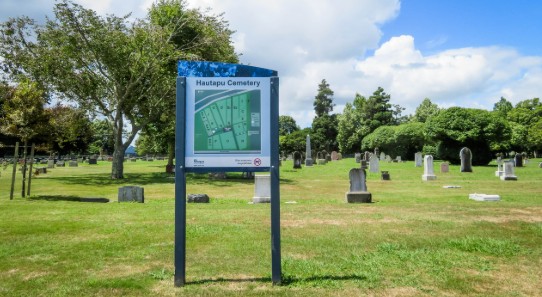
In early May, Friends of the Museum gathered beneath the autumn trees for a guided walk through Hautapu Cemetery. Led by local historian Lyn Williams, The Dead Tell Tales tour explored many of the great and good connected with the district’s history. Familiar names emerged from the headstones: Māori Rangatira, community leaders, town merchants, farmers, veterans and families whose influence still echoes through Cambridge today.
Yet as is often the case in museums and local history, the most important stories are not always about those most visibly remembered.
Among the visitors that afternoon was Raewyn Tipene Nordstrom, who had come to visit her own ancestors resting within the cemetery grounds. While listening to Lyn’s stories, she reflected on another cemetery story, one preserved not through plaques or official records, but through oral history.
Raewyn had heard a story about a korowai discovered during an exhumation and wanted to speak with someone who might hold first-hand knowledge of it. She knew exactly whom to ask – former cemetery sexton Dean Signal.
For many in Cambridge, Dean was as much a part of the cemeteries as the trees and weathered headstones themselves. As sexton for the district’s cemeteries for almost thirty years, he was a guardian of the town’s dead. He often joked that he had “hundreds of people underneath him and had never received a complaint.” But behind the humour was someone remembered for his compassion, empathy and a strong connection to the cemetery and the people buried there.
Raewyn also held a personal connection with Dean. Over many years he had buried members of her own whānau at Pukerimu Cemetery. She knew him as someone who understood not simply the physical work of burial, but the emotional and cultural weight carried within it.
At Dean’s funeral in August 2024, stories emerged of him speaking gently to children he had buried “just to make sure they were comfortable”, worrying overnight that a freshly dug grave might collapse before the next day’s service, and even stopping to bury an injured cemetery duck with care and dignity. (Cambridge News, “So Good for the Souls”, 22/8/2024)
Dean Signal understood that cemeteries are not simply places of death. They are places of memory, grief, love, ritual and continuing connection.
It was during Raewyn’s interview with Dean that he recounted the story of Andrew Hokai.
Andrew Hokai and the Journey Home
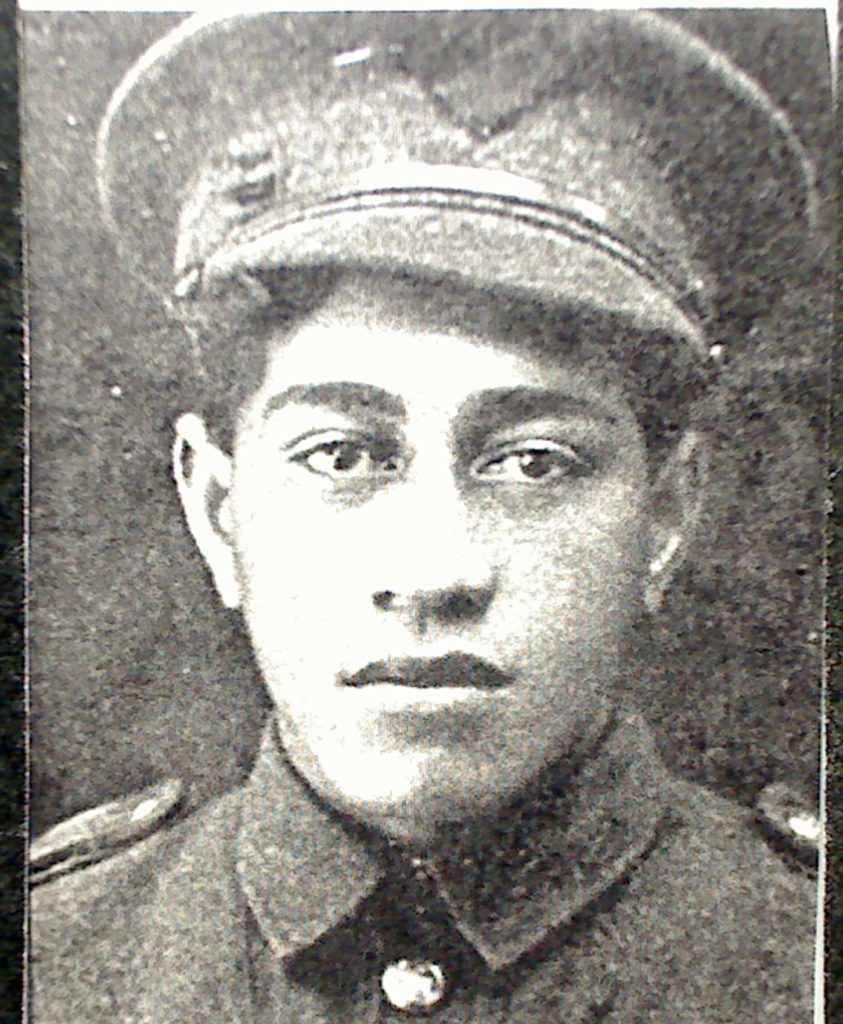
Records show that Andrew Hokai served in the 5th Māori Contingent during the First World War. His service number was 16/1512, and his father at Whangape in the Far North was listed as his next of kin. Today his service is remembered through Auckland Museum’s Online Cenotaph records and the 28th Māori Battalion website.
Andrew Hokai’s story is not straightforward. Newspaper accounts from 1949 record that he died following a violent altercation that later became the subject of court proceedings. (Northern Advocate, 28 July 1949, Page 5) Such details remind us that local history is rarely neat or easily reduced to simple narratives.
Like many Māori who died away from their ancestral lands, Andrew Hokai was originally buried where circumstance required. In earlier periods of New Zealand history, distance, transport limitations, financial hardship or work often prevented immediate return home following death.
Yet for many Māori families, burial places are deeply connected to whakapapa, whenua and identity. Returning tūpuna to their homeland is not simply about relocation. It is about reconnecting the deceased with their people, ancestors and whenua.
According to Dean Signal’s recollections, Andrew Hokai was later exhumed so he could be returned to his ancestral home. Significant tikanga are involved in exhumation, or hahunga, the traditional practice of uplifting and moving tūpāpaku.
The story itself is significant, but equally important is the fact it survives at all. Without Raewyn taking the time to record Dean’s memories before his passing, this small but meaningful piece of Cambridge history may well have disappeared entirely.
A remarkable discovery
One detail from Dean’s recollection remains especially vivid. During the exhumation, the korowai or cloak wrapped around Andrew Hokai’s coffin was found to be intact.
This seems extraordinary, given Cambridge’s long association with swampy wetlands. Yet Dean believed the sandy nature of parts of the cemetery soil may have contributed to the preservation of the flax.
Whether viewed scientifically, culturally or emotionally, the image is a powerful one. A korowai symbolising dignity, identity, honour and connection, surviving beneath the earth long after burial.
The story reminds us that cemeteries are layered places. Beneath the visible landscape lie stories of movement, displacement, return and remembrance. In many ways, the people no longer physically present within the cemetery can sometimes tell us just as much about our history as those who remain.
Preserving more than headstones
Perhaps one of the strongest reflections from the cemetery tour was that local history is not preserved only through monuments or official records People such as Dean Signal carried enormous amounts of local knowledge that existed nowhere else except in memory and storytelling. Through Raewyn’s foresight in interviewing him, one of those stories now remains part of Cambridge’s shared history.
For museums and historical societies, this is an important reminder. Preserving history is not only about protecting artefacts, photographs and archives. It is also about safeguarding voices, memories and human connections before they disappear.
As Friends of the Cambridge Historical Society and Museum drifted quietly from the cemetery that autumn afternoon, many likely carried away more than dates and names. They carried an understanding that history is not always found only in grand monuments or official records.
Photograph of Hautapu Cemetery: Waipa District Council
Photograph of Andrew Hokai: Auckland Cenotaph
Article written by Elizabeth Harvey for the June 2026 Cambridge Historical Society Newsletter.