Lives Well Lived: Rediscovering the Hewett Connection
-
Since its inception, the Cambridge Museum has frequently received large collections from family estates with every item requiring careful assessment. With limited staff resources, the Museum has sometimes accepted these collections en bloc, to be worked on when time allowed.
Our Collection Assessment project is now giving us that opportunity. Items in our Archive are being examined individually, researched and given the attention they deserve. The Hewett collection has been a particular highlight.
Farming at Roto-o-Rangi
The Hewett family story reaches back to the earliest years of European settlement in New Zealand. Ellen Hewett’s voice is heard through her autobiography Looking Back[1] about her emigration to New Zealand in the 1850s, her marriage to James Duff Hewett and her early widowhood. Their son Charles married Jane, and had five children: Mildred, Audrey, Basil, William (Bill) and Cynthia.
The family moved to a farm in Roto-o-Rangi in the 1920s. When Cynthia Hewett passed away aged 91 in 2003, a collection of photos and memorabilia was donated to the Cambridge Museum. If we consider the objects in this collection with information in our research files, we get an idea of how the Hewett children lived, worked and passed their time.
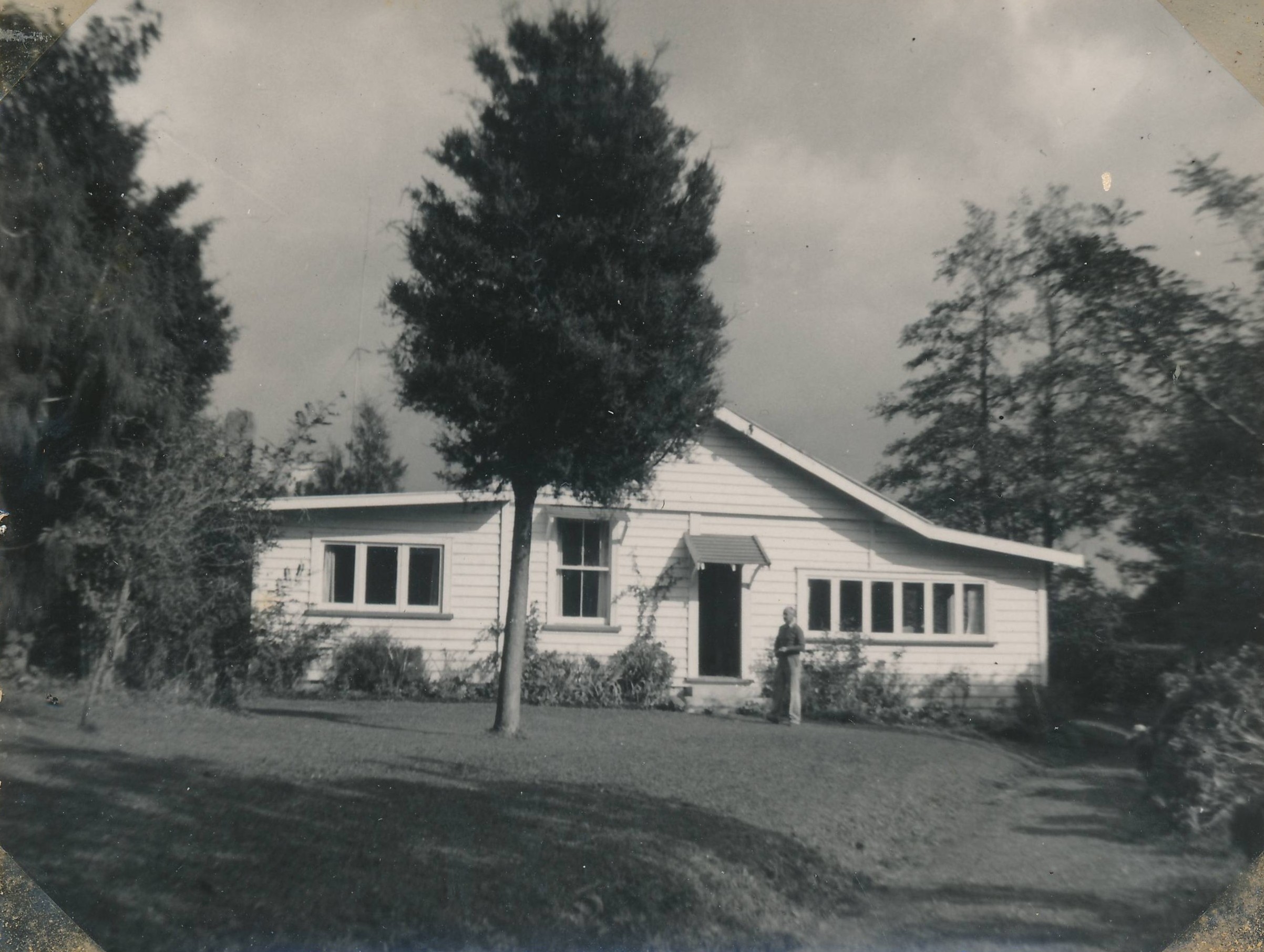
CM3503/85: The Hewetts’ Roto-o-Rangi home
Basil and Bill attended boarding school at Wanganui Collegiate. Eldest sister Mildred married Geoffrey Goodwin and moved to Lower Hutt in the 1920s. By the time World War II broke out, Basil and Bill were running the Roto-o-Rangi farm. They were successful enough to purchase an additional farm in Tauranga to plant eucalyptus trees. Both brothers soon left for Europe on active service. Bill was killed in 1942.
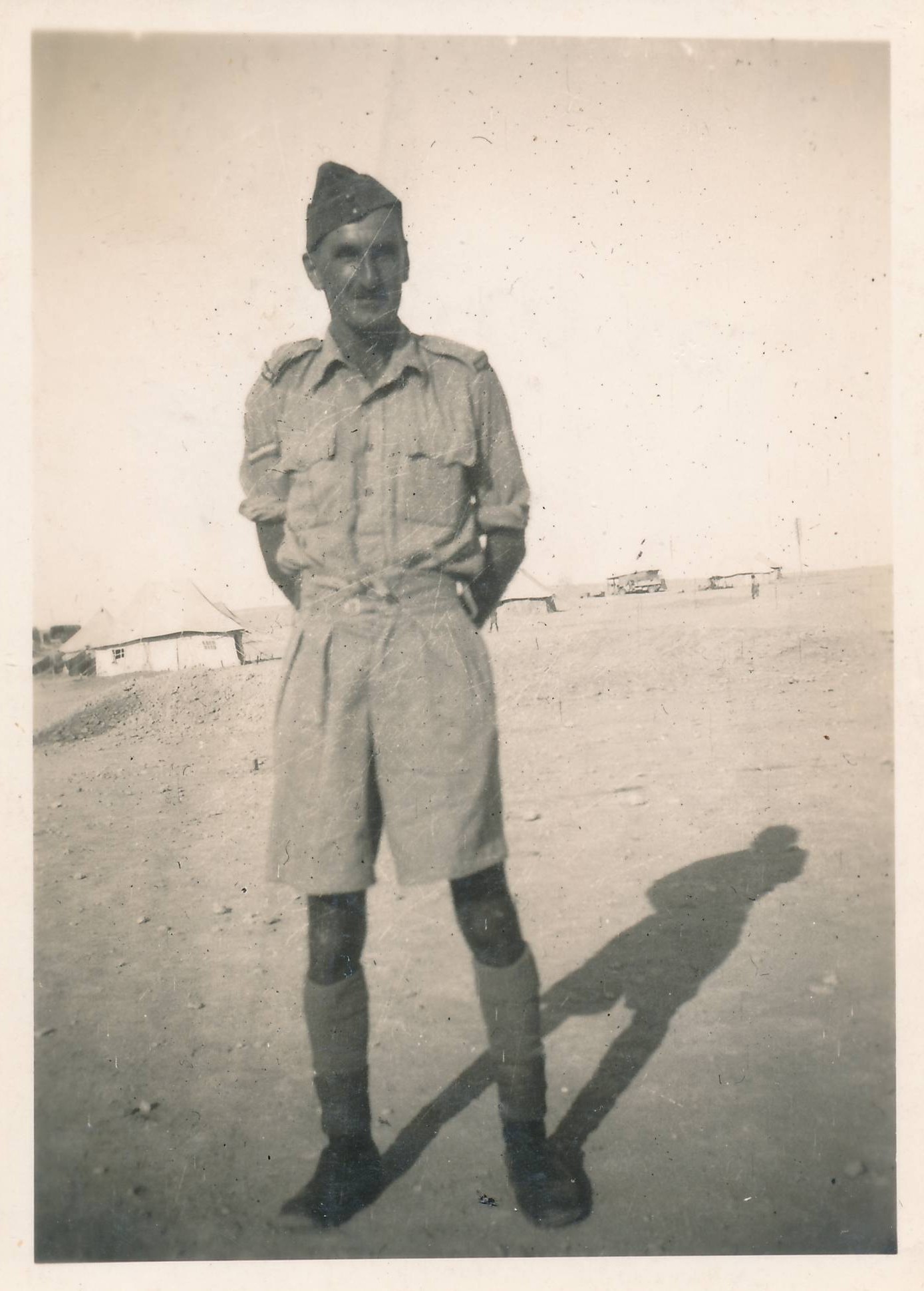
CM3503/102: William Upton Hewett
Why did the brothers plant eucalyptus trees in Tauranga? Their brother-in-law Geoffrey Goodwin had interests in forestry, and they would have seen it as a financially viable investment that would aid the development of New Zealand’s infrastructure in the 1950s. The timber was durable, stiff and strong, particularly ideal for posts, poles and heavy structural timbers, as well as wharves, jetties, bridges and rail sleepers.[2]
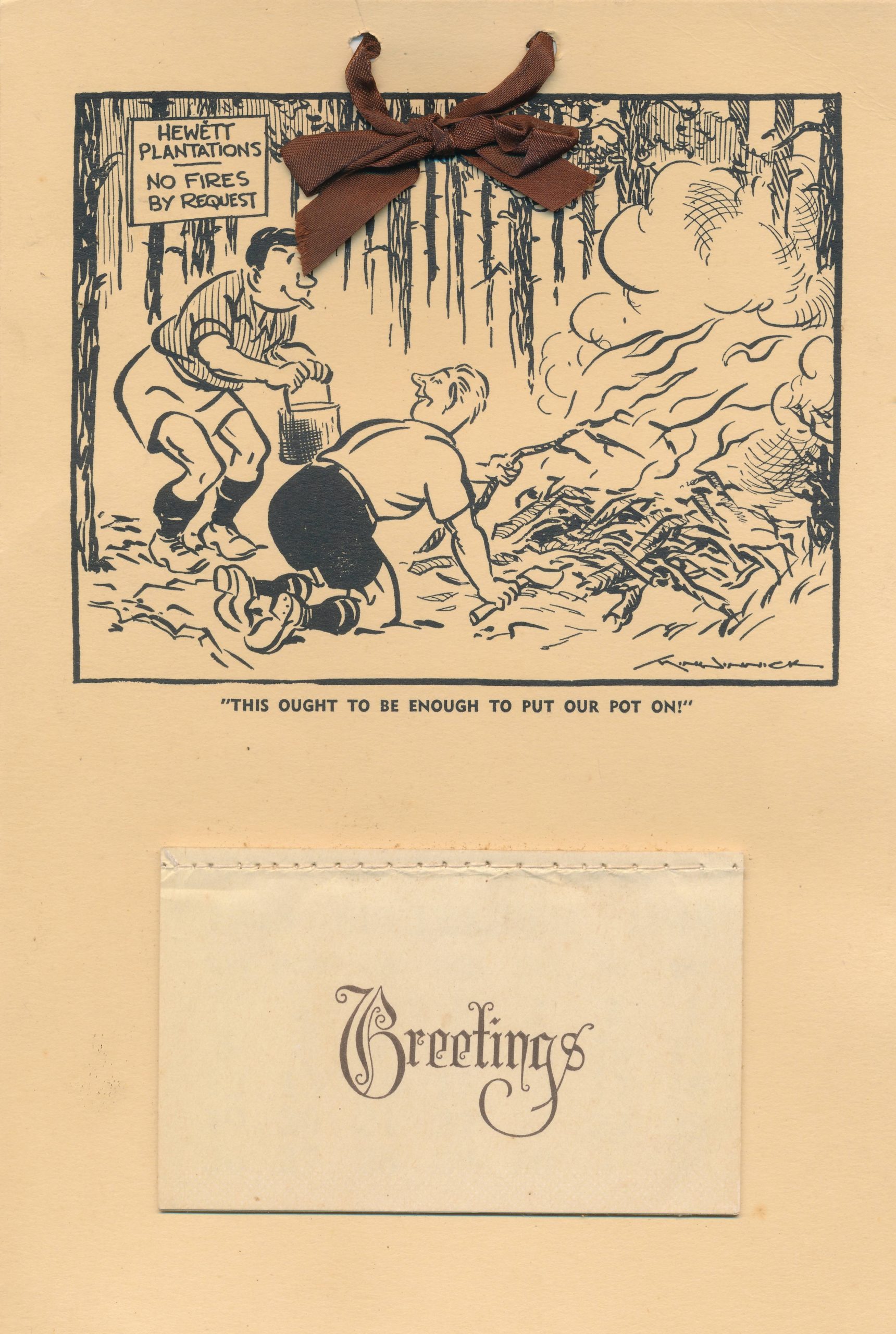
CM3503/30: Minhinnick cartoon referencing the Hewett plantations, dated 1948. The first plantation burned down while Basil was on active service overseas.
Audrey and Cynthia had returned to Roto-o-Rangi to look after the family farm while Basil and Bill were serving overseas. Basil, Audrey and Cynthia continued to live there until around the mid-1970s when they moved to Cambridge.
Pastimes and hobbies
The Hewetts had a wide range of pastimes to keep them busy. Basil was good at sport, particularly tennis and golf. They enjoyed fishing and sailing, staying in baches with friends and family.
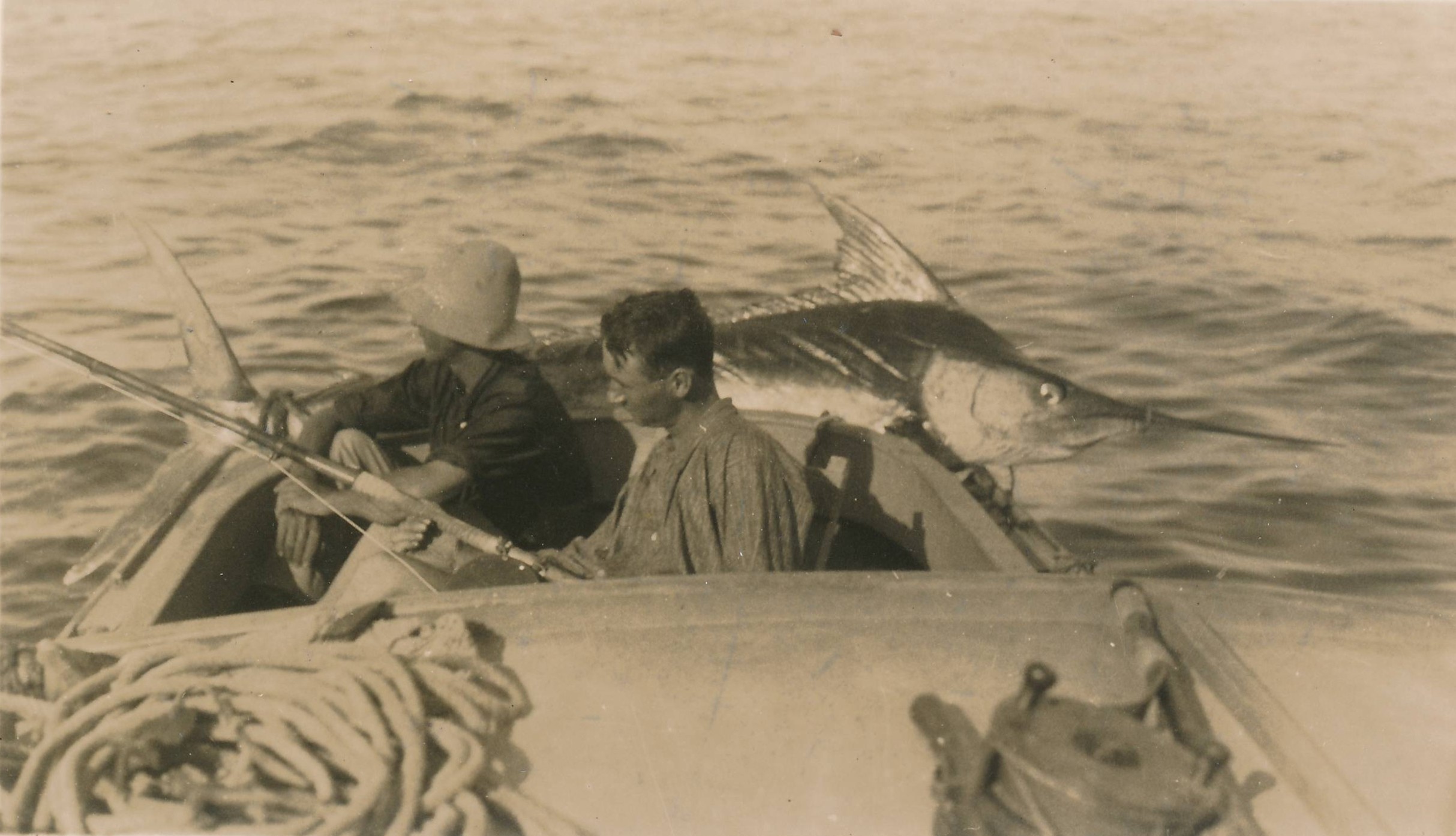
CM3503/70: Basil (right) with a friend on a successful day’s fishing.
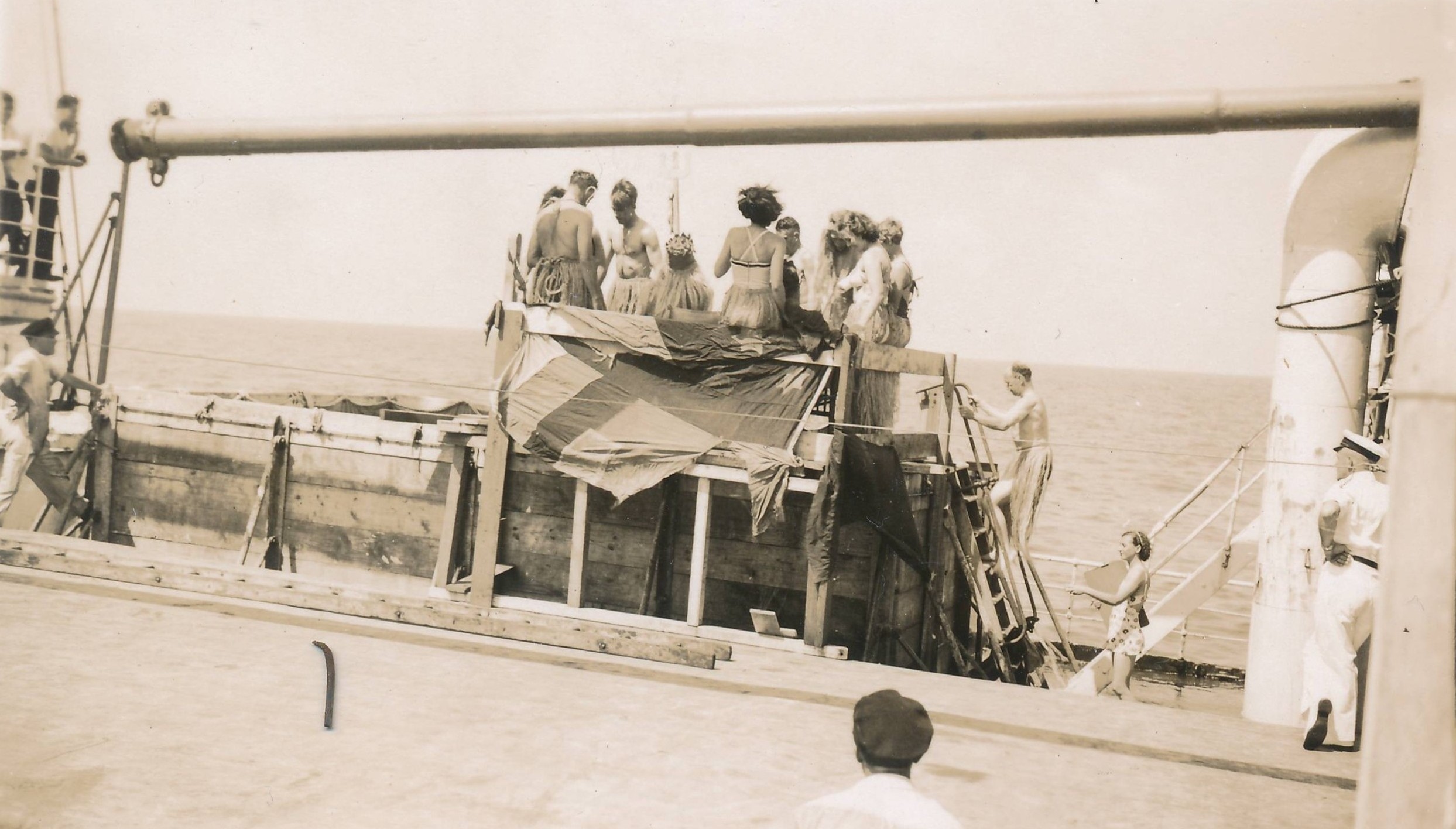
Basil travelled to and from Europe, and his 1950s photographs of life on board ship are telling – from the rock star status of the Captain, to an onboard swimming pool which looks like it was put together as an afterthought by the crew.
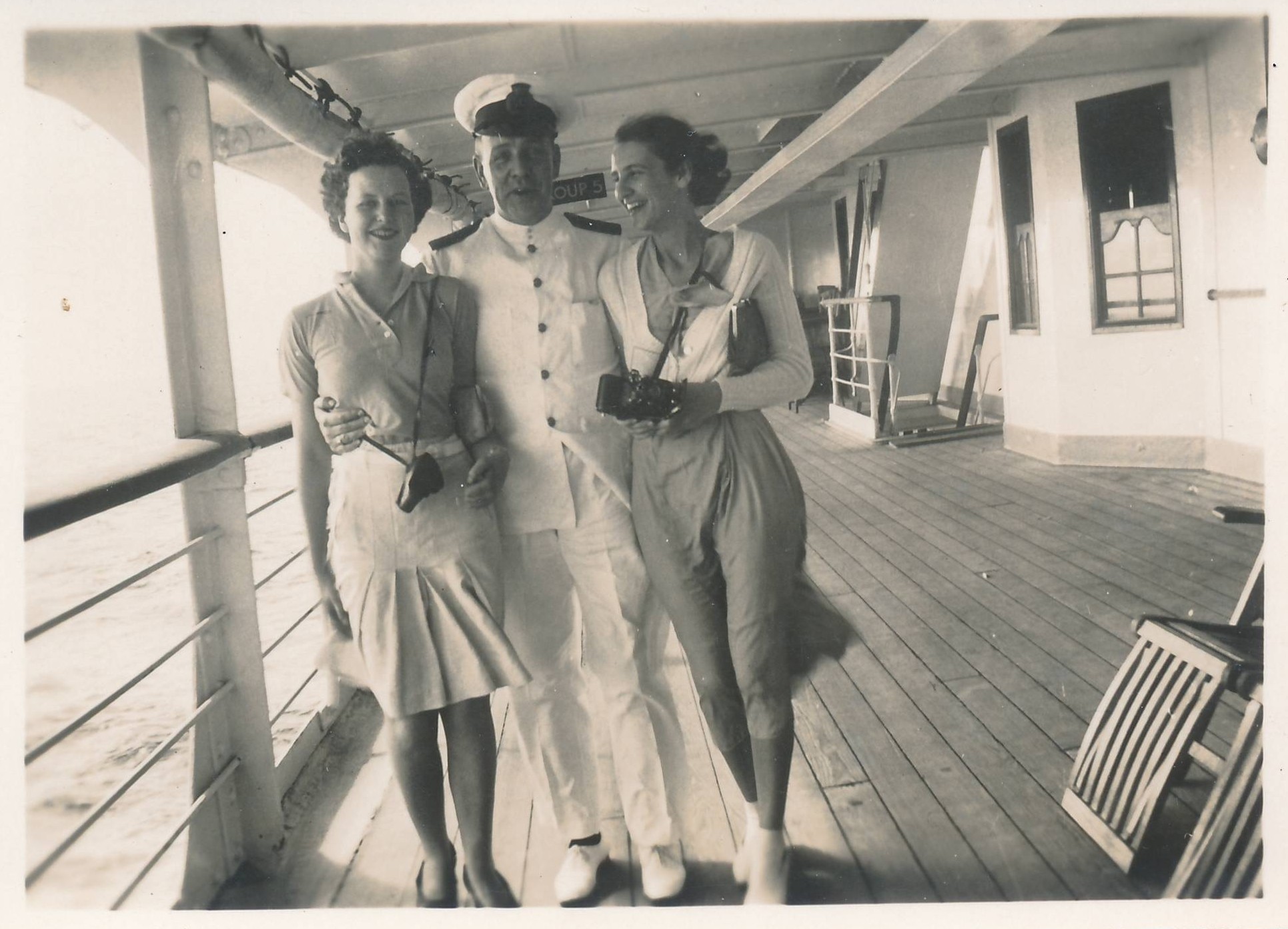
Above: CM3503/113: Photo op with the Captain
Below: CM3503/115: Fancy a dip, anyone?
Along with the photographs are unique and quirky objects, such as:
- a dance card for a 1920s ball held for the future King of England on which one of the Hewett sisters wrote “Second night – I danced with HRH Prince of Wales 28/4/1920”.
- a handout advertising one of Audrey’s Dancing Classes for Children, printed when she was living in Rotorua pre-World War II.
- a disc recording amateur solo singers from 1946
- “Susie’s Bath Night” – a naughty cartoon tame by today’s standards, and
- a 1950s pin-up calendar.
Preserving native flora and fauna
Perhaps the most enduring part of the Hewett story is the family’s relationship with the land.
The Hewett family developed a commitment to regenerating native forest and wetlands. In 1991, Basil and Cynthia paid tribute to their brother by funding the William Upton Hewett Memorial Reserve of 242ha just north of Whangārei. The Basil Hewett Memorial Reserve is 360ha of mature hill country forest between Te Kuiti and Awakino, and the Cynthia Hewett Memorial Reserve is 90ha of regenerating forest eight kilometres north of Thames.
According to their great-nephew Jeremy Goodwin, Basil and Cynthia were among the first people to covenant part of their land which had native bush on it.
Mildred and Audrey passed away within two years of each other in the 1980s. Basil died in 1998 aged 96 and Cynthia, in 2003 aged 91. Perhaps some of our readers remember them?
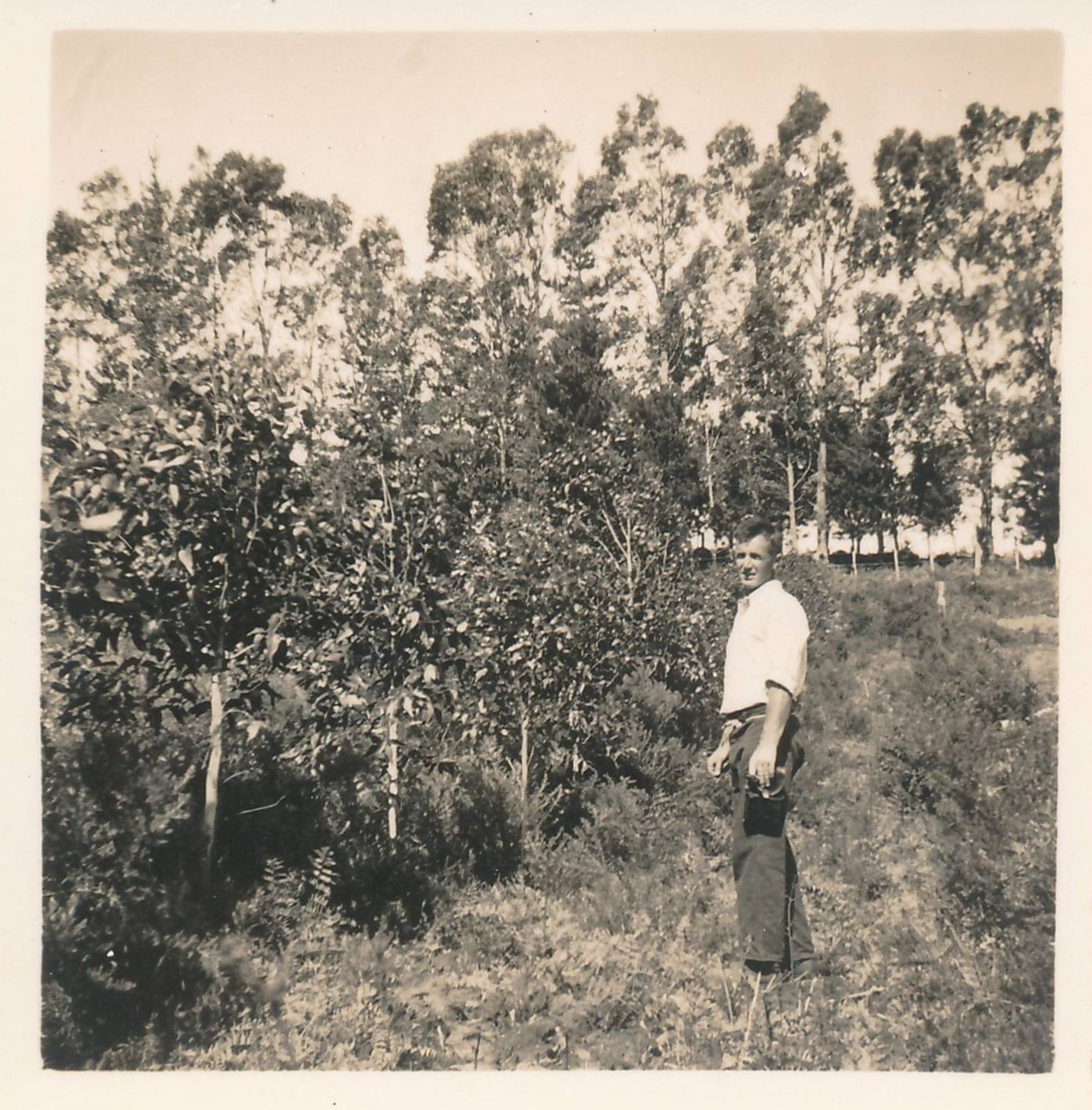
CM3503/57: Basil at one of his tree plantations, Nov 1940
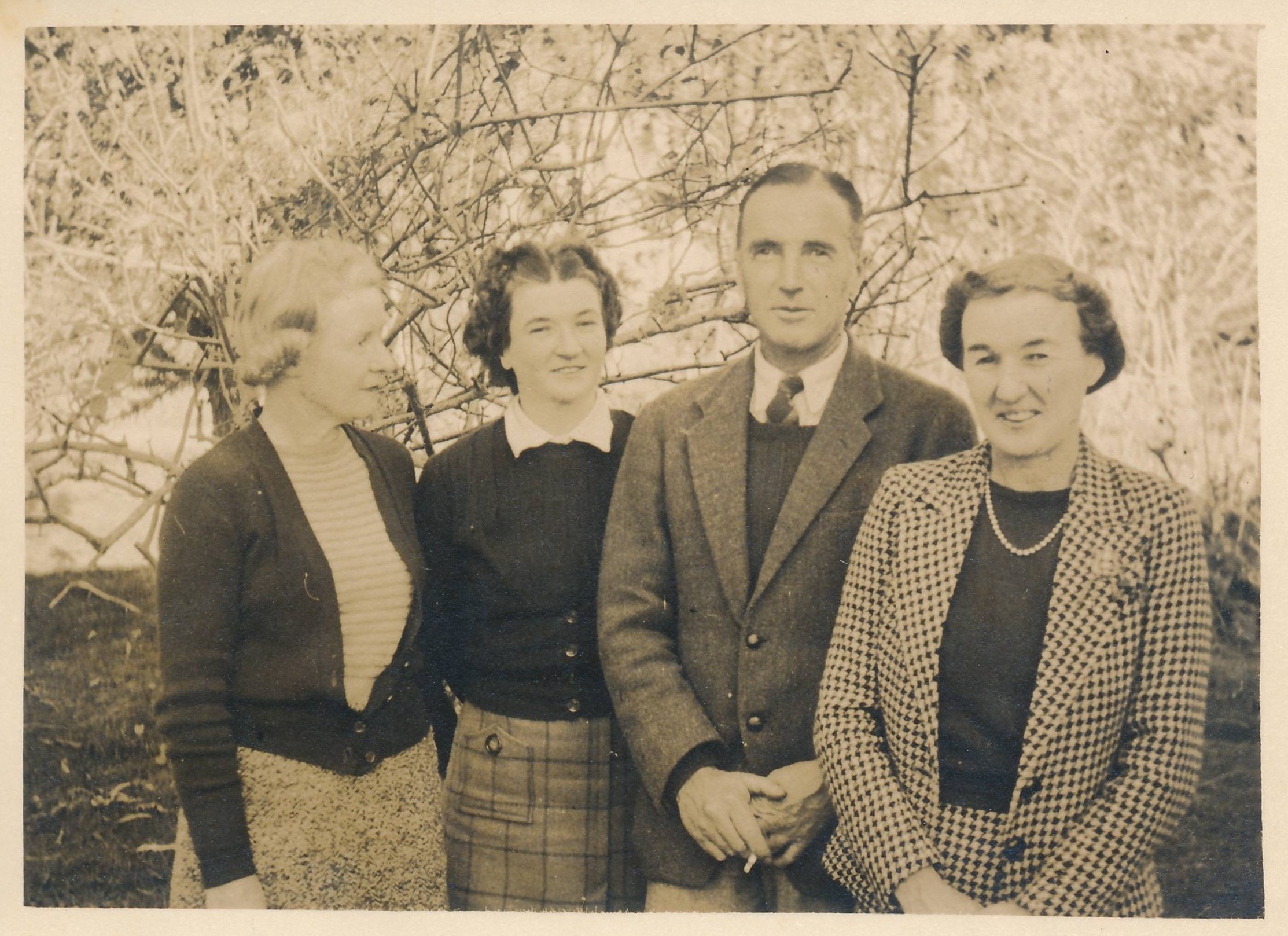
CM3503/124: From left, Cynthia, Audrey, Basil and Mildred
The family’s legacy continues through the B and C Hewett Charitable Trust, a philanthropic trust that supports environmental and community enhancements. Among its work has been the restoration of the organ at St Andrew’s Anglican Church in Cambridge, and a native planting project at the 6th hole of the Cambridge Golf Club.
It is clear that the Hewett Collection’s story is not confined to the Museum shelves. The family’s interest in land, planting and conservation continues to resonate today.
Published in the Cambridge Historical Society’s October 2026 Newsletter by Karen Payne
[1] A copy is held in the Museum’s collection CM4674
[2] NZFI, Nicholas and Millen, 2012